

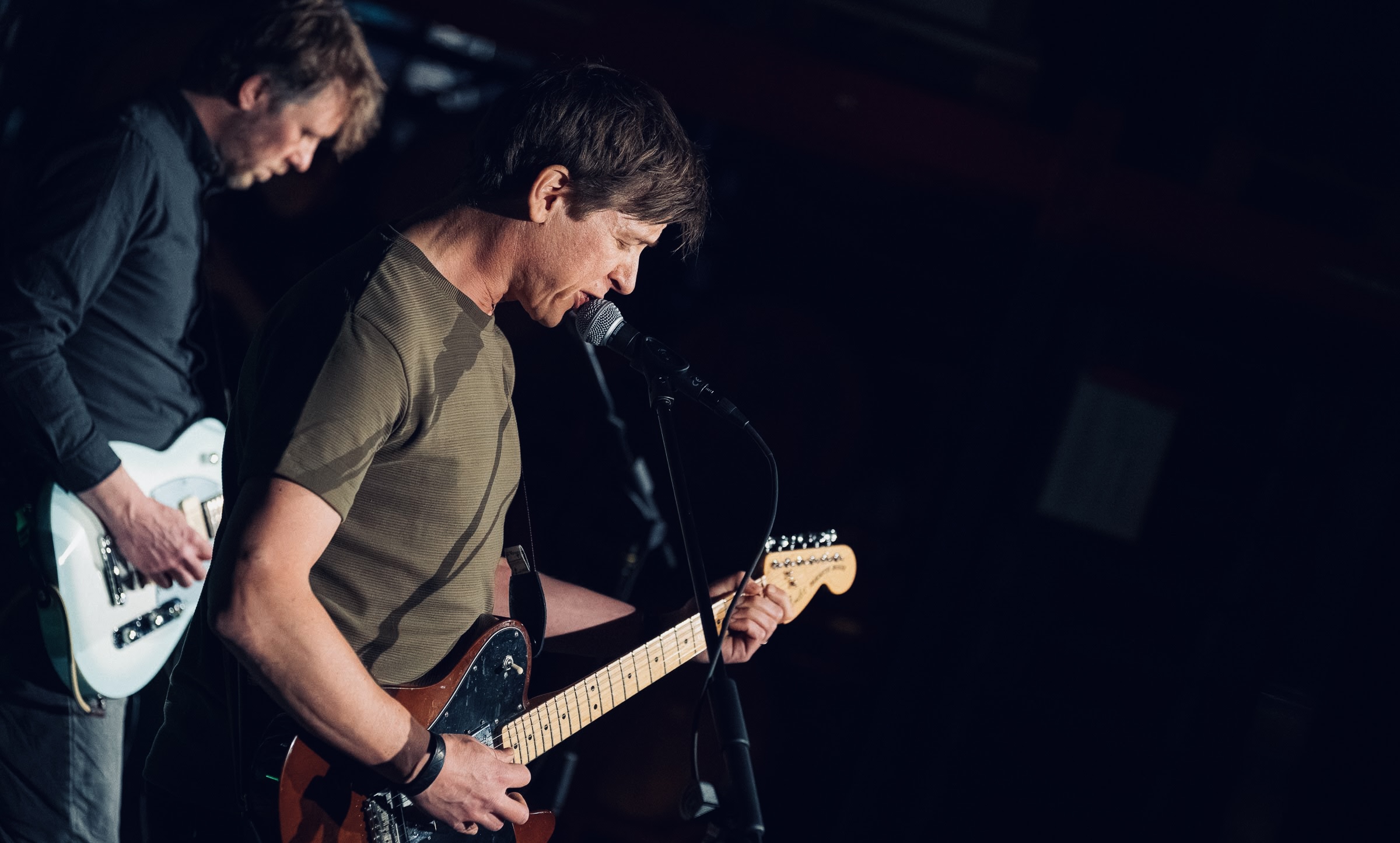
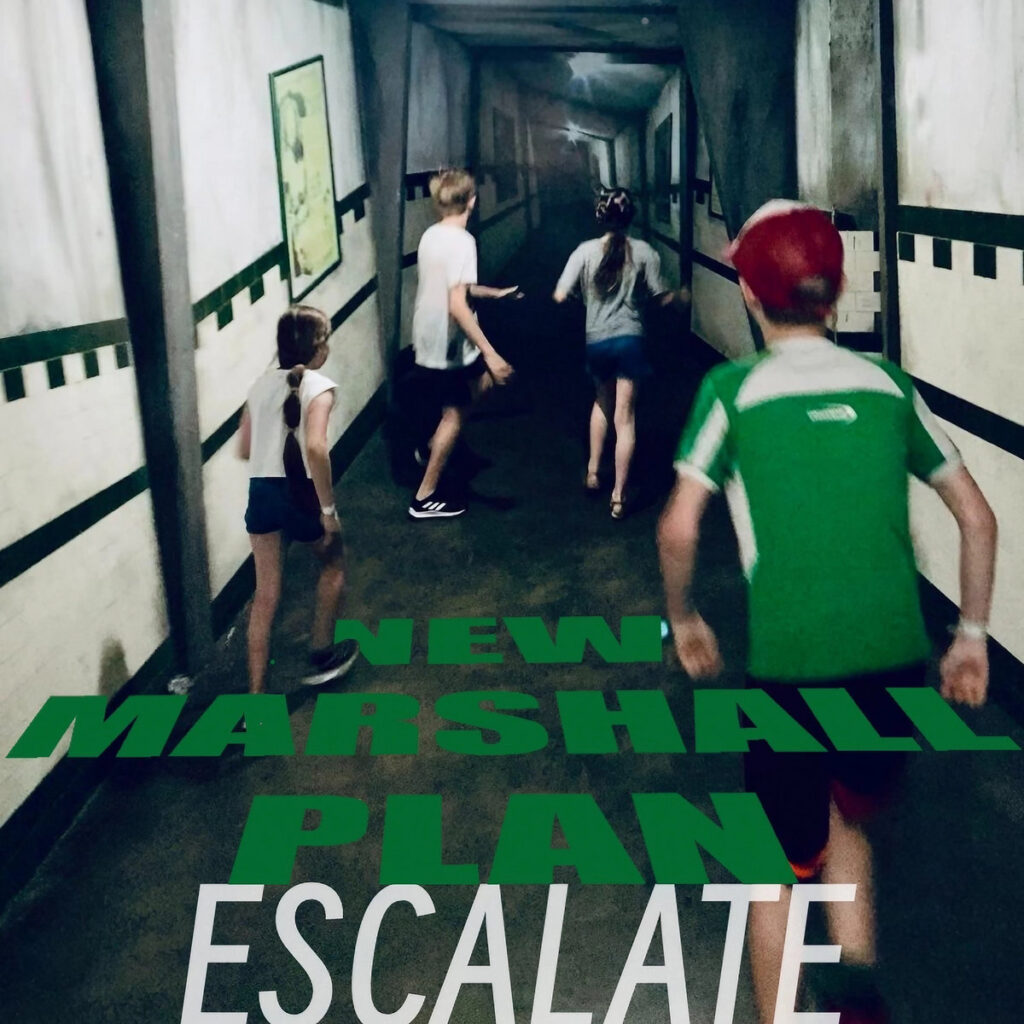
New Marshall Plan
Album: Escalate
Release Date: 2024
Netherlands
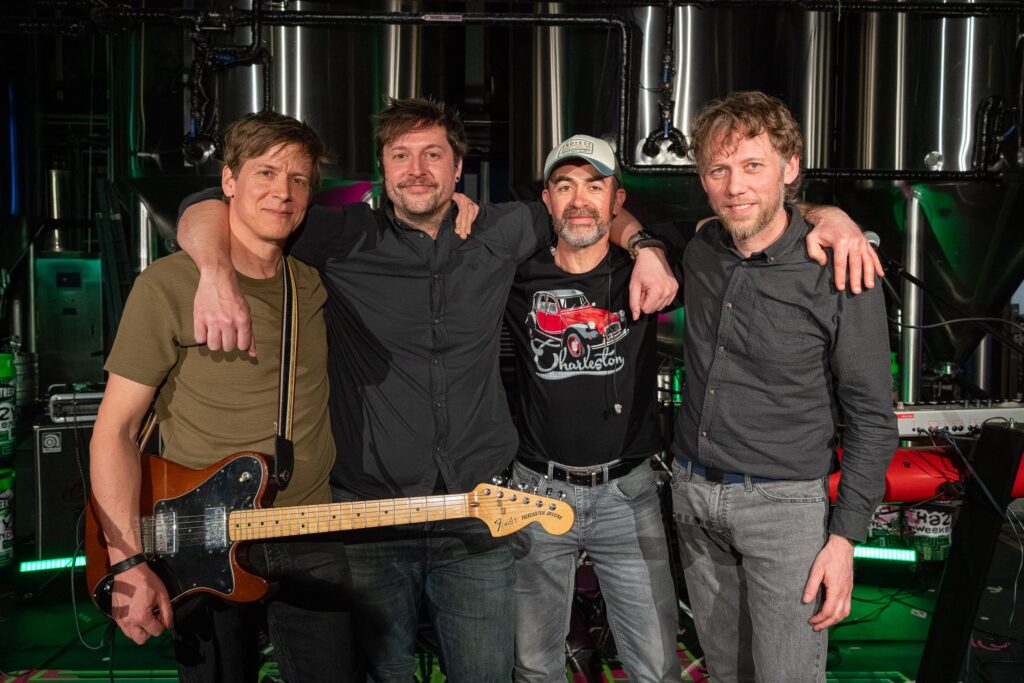
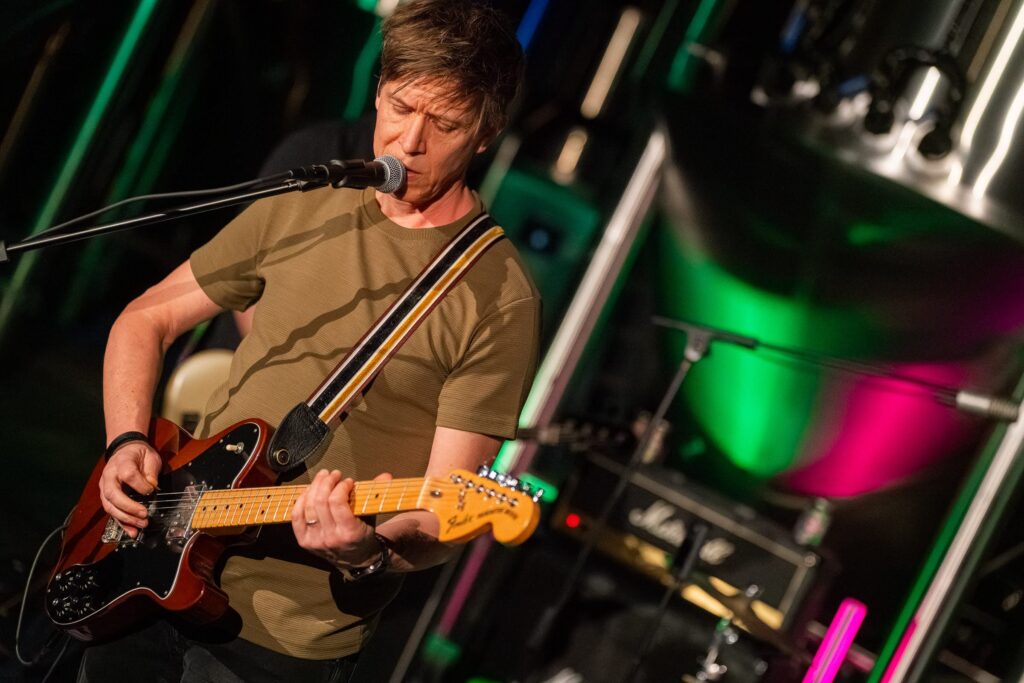
New Marshall Plan is a Dutch indie band creating music rooted in the rich traditions of synthpop, rock, and new wave. They were formed more than 20 years ago out of a shared love for bands like Depeche Mode, Joy Division, Radiohead, Interpol, and The Whitest Boy Alive—but for a long time, the songs stayed close to home. In June 2023 they recorded the album “Escalate” at Mailmen Studio with Martijn Groeneveld, known for his work with Blaudzun and Klangstof. Link
Lyrics: Go Running
Oh sister, nobody knows
What the future will bring
Just that we’ll have, to move on
Without, our queen and king
It’s surreal that you’re gone
We still want you, back here
Thoughts spiraling down
In a negative feedback loop
A crash, you’re pushed back
Your world turns pitch black
That first and last crash
Your mind went in a flash
Oh sister, nobody knows
What our future will bring
It’s useless
This can’t stay
Or did you want us to
I guess we should
Let’s go running
Come back here
Let’s go running
Come right here, NOW
Fate can make
It can break us
Cause good deeds and mistakes, sister
It destroys and creates
Our triumphs and heartaches
Fate can make
It can break us bad
Cause good deeds and mistakes
Right dad
And it destroys and creates
But for now
It keeps me locked in a heartache!
Go running
Come back here
Keep me locked in a heartache
Go running
Come right here
It keeps me locked in a heartache
Tracklist: Escalate
01. “Can’t Fight Me”
02. “In The Air”
03. “Lockdown”
04. “Numb”
05. “Masterplan”
06. “Money”
07. “Go Running”
08. “What You Want!”
09. “Control”
10. “Tape”
Releasing music and receiving responses from people around the world now gives us the sense that we are leaving something behind. A song exists in someone else’s library and can sometimes have a tiny influence on their life.
Rogier on the band’s musical turning point
You mentioned this is probably the most personal song you’ve ever written. Before we get into the details, what made “Go Running” different from every other song in your catalogue?
The origin of the music is quite special. Somewhere around 2020, we started an unplanned jam during a rehearsal. It lasted eight or nine minutes and, after cutting out a few sections, it already roughly followed the structure that “Go Running” has now.
That is one of the magical things about playing in a band. Sometimes everyone starts playing without discussing anything, and because you know each other so well, something appears that none of you could have planned individually. We record all our rehearsals with a simple Zoom recorder, then that jam ended sitting idle for a while, but it never fully left my mind. Even before it had lyrics, it felt like it should become something personal and emotional.
After my father died in December 2022, I immediately knew what that piece of music had been waiting for. It became a way for me to honour him and help me in mourning. His death also is closely connected to the decision to finally record and release our album ‘Escalate’, and to do it ‘right’. His death made me realise that if something matters to you, you cannot keep postponing it.
Was there a specific moment that sparked the song, or did it emerge gradually over weeks or months?
My father’s death was the moment that gave the music its subject, but the lyrics emerged gradually.
My mother had already died in 2015 after a long and terrible struggle with Alzheimer’s, so when my father died, he was our last surviving parent. From January 2023 until June, my sister and I spent almost every Wednesday in our parents’ house, slowly emptying it. My father had kept an enormous number of things, so it took us around 26 Wednesdays to do this ‘respectfully’.
The lyrics developed while we were going through that process. We were not only sorting through objects. We were sorting through memories, unfinished plans and the remains of an entire shared family life. Some days were practical, some were painful, and usually they were both.
We recorded the album in May 2023, while we were still very much inside that process. So the song was not written from a comfortable distance. It was written while the grief and the work of saying goodbye were still happening.
Without giving away anything you’d rather keep private, what is “Go Running” really about? Do you remember the first lyric or musical idea that made you realise what the song wanted to say?
At its most direct level, it is about the sudden death of my father, Jan. On December 14, 2022, he was struck by a careless driver in a supermarket car park. He died from his injuries six days later.
But the song is also about what happens afterward. It is about my sister and me walking through our parents’ home, surrounded by their belongings, and slowly understanding that this chapter of our lives was ending. You can be an adult with your own family and children, but losing your last parent still changes your place in the world.
I tend to write lyrics by collecting fragments in a scratch pad rather than beginning with a complete idea. The “Go running, come right here” refrain appeared quite early. So did “Oh sister, nobody knows,” because I wanted the song to feel partly like a conversation with my sister. She is briefly visible in the music video while I am walking through the house.
Over time, the song became broader than the accident itself. It became about mortality, the plans people leave unfinished, and the need to live rather than continually waiting for the right moment.

Loss often leaves us speaking in metaphors because plain language isn’t enough. Was “running” always the central image, or did that symbolism reveal itself during the writing process?
I cannot completely reconstruct where the title first came from, but running is important in my own life. It is one of the things that calms my mind and helps me detach from the noise and busyness of the world. Continuing to run during that period genuinely helped me cope.
There is also one very specific memory connected to it. During the months in which we were emptying the house, my sister and I decided to sleep there together one final time. The next morning, we went running through the neighbourhood where we had grown up. It felt like a quiet way of saying goodbye to the house, the surroundings and the city that had been such an important part of our lives.
My father was not a runner, but he was a traveller, an adventurer and a doer. He worked on development projects in different parts of the world and was always interested in what was beyond his immediate surroundings. In that sense, he was always moving.
The refrain contains a contradiction: “Go running, come right here.” It is movement combined with the impossible wish that someone will return.
Were there lyrics you almost didn’t include because they felt too revealing? If so, what convinced you to leave them in?
The song went through several lyrical iterations, as most of our songs do. There were moments when I wondered whether some of it was too explicit or too sentimental. I usually leave more distance between myself and a lyric, but with this song I did not want to hide behind abstraction.
The direct references to the accident, addressing my sister and then suddenly saying “Right, Dad” all felt very exposed. So did the simple act of asking him to come back. There is no clever protection in that.
The most emotional section for me was: “It destroys and creates, our triumphs and heartaches.” Recording those lines in May 2023, only a few months after his death, was extremely difficult. There were a lot of tears during the vocal recording. The final “Go running, come right here” before the synthesizer ending was difficult for the same reason.
In the end, I left those emotions uncovered because they were true. If I had made the song ‘safer’ or more abstract, it would no longer have expressed what I actually felt.
How did the rest of the band react when they first heard the song? Did everyone immediately understand how personal it was?
They mainly saw the emotion in me and supported me through the process. These are not simply people I happen to make music with. Most of us have known each other for a very long time. Roeland had met my father, and Roeland, David and some previous band members were there at his funeral.
They understood that this song simply had to be completed, even though it was one of the hardest tracks on the album to arrange and record. The original jam contained many different sections, and during the studio sessions we never actually played the entire song from beginning to end as a full band. We had to build it through a lot of trial and error and record different sections separately.
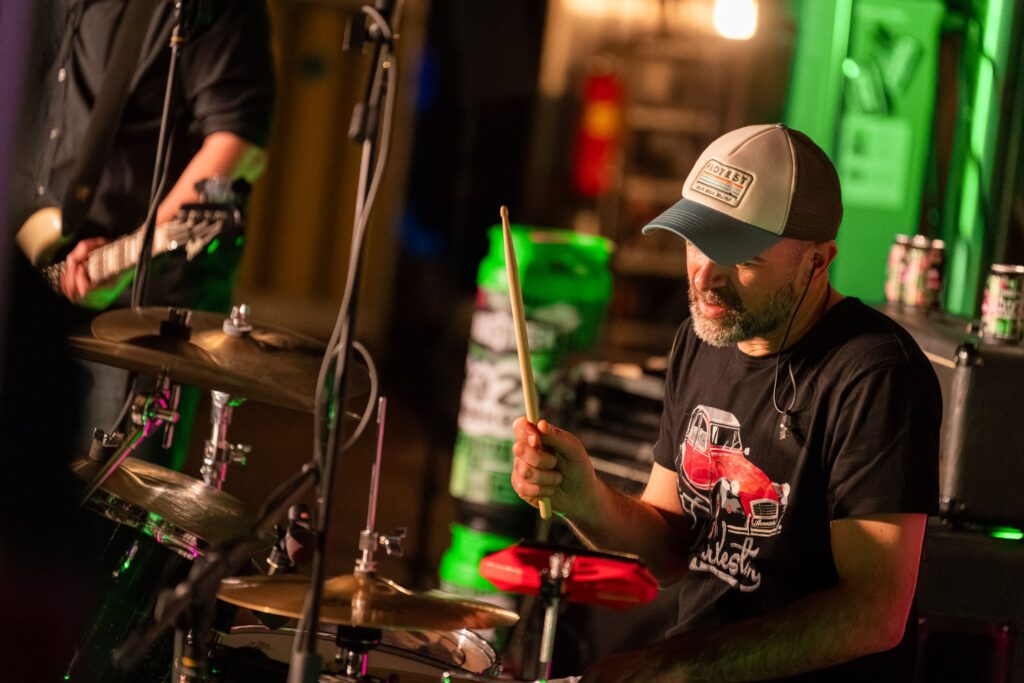
Their appreciation for the song has grown over time. During the last year, we developed a live version that is more intense, slightly faster and more guitar-driven than the recording. It has probably become one of their three favourite New Marshall Plan songs to play live.
Looking back now, does the song document a particular chapter of your life, or does it continue to evolve in meaning every time you perform it?
It began as a very specific document of those months with my sister: the Wednesdays in the house, the objects, the memories and the immediate grief.
It now means something broader to me. It is about mortality, unfinished plans and the question of what we choose to do with the time available to us. My father had lived a full and adventurous life, but he still had plans. For example, he wanted to write a book, but he never really started it.
Clearing the house also changed the way I think about possessions. My father was a bit of a hoarder, and we were surrounded by things that had mattered to him but would mean little to anyone else. In the video, you initially see all those objects, but toward the end you mainly see people, relationships and experiences. That is deliberate. Those are the things that remain meaningful.
Performing the song now connects it to our own decision as a band to stop postponing things: releasing records, performing again and making ambitious plans while we still can.
Do you find performing this song emotionally difficult, or has playing it repeatedly become part of processing what inspired it?
Recording it was probably the most emotionally difficult experience. We were only about five months removed from my father’s death, and the mourning process was still very raw. At the same time, recording the vocal became an important part of processing it.
When we first began rehearsing the song for live performances, it was still very emotional. That has become somewhat easier, but it has not become emotionally neutral. During “It destroys and creates, our triumphs and heartaches,” I can still feel the emotion rising…
The live version has more momentum, guitars and intensity. That has subtly changed the experience. The recorded version feels like being alone inside the grief, while the live version feels more like releasing it together with the band and the audience. Now that I reflect on this, we should really record that version too 🙂
Have listeners shared stories with you about “Go Running” that surprised you? Has anyone interpreted it in a way that made you see your own song differently?
We have received many responses from people who lost parents or other loved ones, and several have told us that the song made them cry or helped them process something they were going through.
One response particularly stayed with me. Someone told us that they had started running because their aunt had terminal cancer and they wanted to take part in Race for Life. They wrote to us on the day their aunt was cremated and said that both the song and running expressed how they were coping.
That affected me because it connected every meaning of “running” in the song: the physical act, the attempt to cope, the need to keep moving and the wish to escape something you cannot escape.
Other listeners have connected it to the fear of losing their parents even before that loss has happened. That made me realise that the song is not only about grief after someone has died. It can also touch anticipatory grief and the anxiety of knowing that the people you love will not always be there.
Those messages are difficult to receive, but they also make us proud that the song can offer people a small amount of recognition or comfort.
Once you’ve written something this honest and personal, does it change the way you approach songwriting afterward?
I have always felt slightly conflicted about writing about myself. There is so much suffering in the world, while I have had a relatively stable and fortunate life. That is one reason many New Marshall Plan songs are political or look outward at war, inequality, greed and misinformation.
There is also an age aspect. I am no longer in my twenties, writing about girlfriends, break-ups and the drama of young relationships. I have been in a stable relationship for a long time and have three children. For years, that made me wonder what I had to complain about and why anyone needed a song about me.
Writing political or observational lyrics can also be safer. You reveal your opinion, but you do not necessarily reveal yourself. “Go Running” made me feel much more exposed.
After this song, and after rewriting “The Other Side” around the same period of my life, I have become more comfortable writing personally. As my children grow older, I also become more aware that I cannot protect them from every disappointment, heartbreak or scar. I can imagine those experiences finding their way into future songs…
There are two versions of “Go Running”: the full version and the radio edit. What drove the decision to create both?
The full version is seven minutes and seven seconds. The radio edit is four minutes and thirty seconds.
The reason for making the edit was mainly practical. We continued to have a lot of faith in the song, but seven minutes is a significant barrier for radio, playlists and people discovering an unknown band. We therefore removed part of the middle section to create a version that was easier to promote.
However, we still consider the full version the true version. Its length allows the song to develop naturally, and the different sections need time to breathe. The extended instrumental progression and the synthesizer ending are part of the emotional experience rather than decorative additions.
The radio edit offers a way into the song. The full version is where we believe the complete journey exists.

Do you ever get the sense that this is a song with a longer life ahead of it than most?
Yes, although I realise that may partly be because I hope it is true.
Grief is universal, but everyone encounters it at a different point in life. That means someone could discover “Go Running” years from now and hear it at exactly the moment when they need it. The responses to this song have consistently been more personal and intense than the responses to anything else we have released.
That is why we recently decided to start promoting it again from our back catalogue through Meta advertising and organic TikTok content. I suspect that may even be how you found us, right?
It is not an obvious breakthrough song. It is slow, emotionally heavy and, in its full form, more than seven minutes long. But I sometimes think that if one of our songs could gradually keep travelling and become a slow breakthrough for us, it might be this one.
Perhaps that is artistic wishful thinking. But the song has already found people long after its original release, so we have reason to keep believing in it.
If you could go back and play “Go Running” for the person who unknowingly inspired it before the song existed, what would you hope they heard in it?
I would want my father to hear that he was loved, that we were angry about how he was taken from us, and that my sister, his grandchildren and I still miss him.
I would also want him to understand the larger lesson I took from his death. He still had plans and things he wanted to create. I wish he had acted on some of them sooner rather than waiting. At the same time, I cannot complain about the life he lived. He travelled widely, worked on projects that helped people and had experiences that many people never have.
I think he would understand the contrast in the video between all the material things in the house and the images of people and experiences at the end. Ultimately, most possessions are left behind and lose their meaning. What remains is how you affected other people and the life you experienced with them.
I would hope he was proud that the song has helped people. He devoted much of his own life to helping others, so I think that would have meant a lot to him.
After several albums and years together, what keeps New Marshall Plan creatively curious?
The magic of playing together is still the most important thing. We have known each other for more than twenty years, and that creates a musical instinct that is difficult to reproduce. During a jam, you can anticipate how someone will respond without needing to explain anything. “Go Running” itself is an example of that.
We are also genuine friends. Music gives us a reason to keep creating and experiencing things together as our lives become increasingly full of jobs, children and responsibilities.
For many years, making music was mainly a hobby. I always had an urge to share it more seriously, but life kept intervening. My father’s death became the catalyst that made us stop waiting. Releasing music and receiving responses from people around the world now gives us the sense that we are leaving something behind. A song exists in someone else’s library and can sometimes have a tiny influence on their life.
We are currently working on our third album, which we plan to release in early 2027, followed by a club tour in the Netherlands. After that, we hope to organise a small European tour. Further ahead, we dream about combining travel with shows in places such as the United States, Mexico or Brazil.
I do not know whether all of that will happen, but I believe that if you genuinely want something and keep acting on it, much more is possible than you initially assume.
Finally, if someone could only hear one New Marshall Plan song after “Go Running,” which would you choose, and why?
I would choose “The Other Side.”
It is connected to the same life-changing events, but it approaches them from a different perspective. The music was originally recorded in 2007, and I later rewrote the lyrics after my father’s death. In that sense, it connects an earlier version of our band with who we are today.
“Go Running” lives very much inside the immediate experience of grief, the house and the desire to have someone return. “The Other Side” looks more broadly at adulthood, losing your parents and continuing through life without them.
Together, I think the two songs tell different parts of the same story.